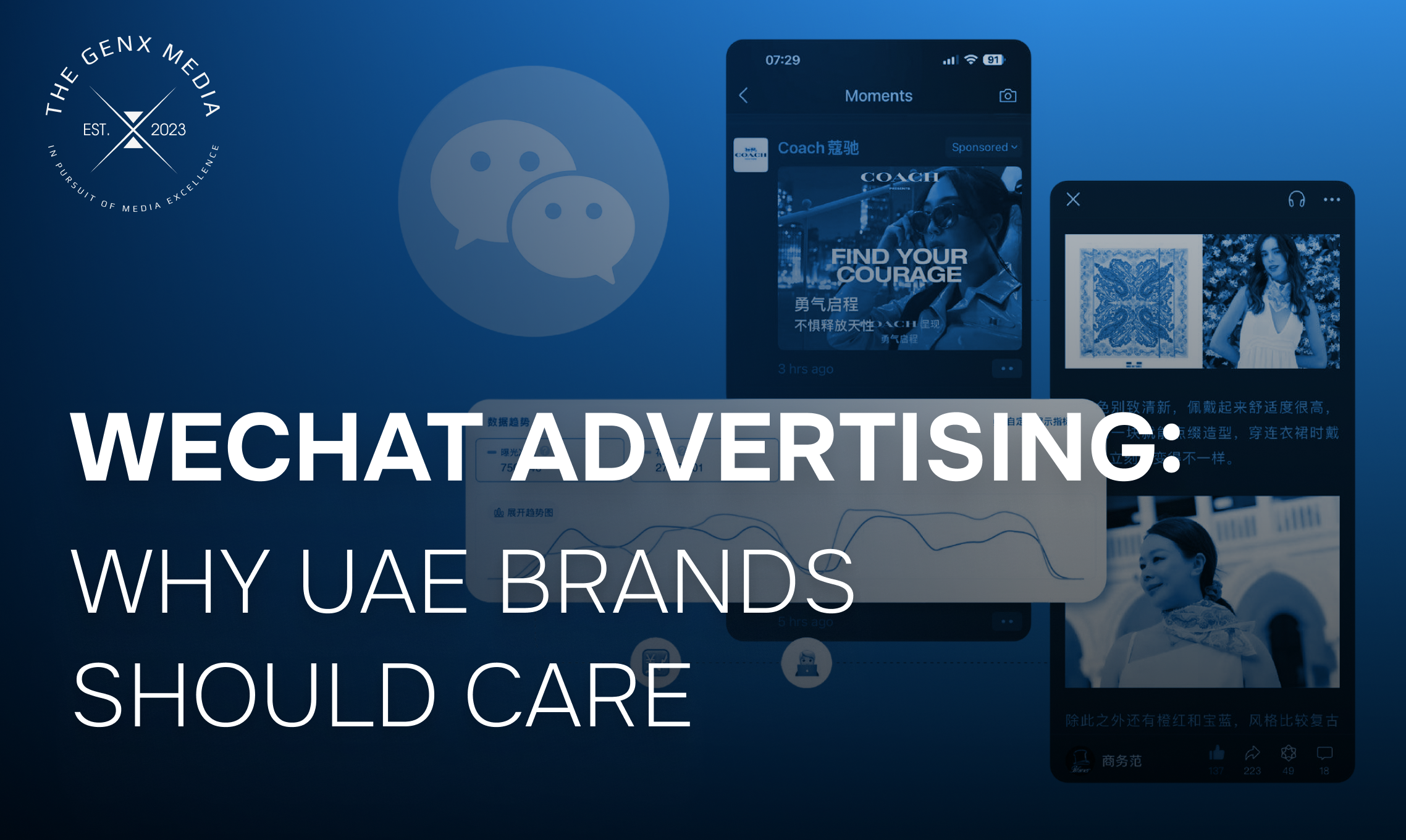
WeChat is by far the biggest social network within China – it is used 10x more than Instagram, Facebook or Snapchat, which is why businesses in the UAE must utilise WeChat advertising to reach Chinese consumers. The Chinese people have made WeChat their sole application for the following: messaging, payment and purchasing, and even engaging with brands.
Therefore, if your business is trying to target tourists, shoppers, investors, or even business travelers coming from China, then this is your opportunity. Let’s dive into this more.
What Is WeChat Advertising?
WeChat advertising refers to a paid marketing service offered by Tencent for promoting businesses through WeChat media. The ads are published in the feed of the user’s social media, articles, and mini programs to ensure visibility of products and services.
The messenger app has over a billion users, making it one of the most influential digital platforms in China. It provides businesses with a great avenue for targeting Chinese audience at different stages of their buying journey.
Types of WeChat Advertising
There are various options for ads on WeChat that brands can choose from to target based on the objective of their campaigns and the target customer base, as per the budget.
- Moments Ads, which appear in users’ social feeds.
- Banner Ads, displayed within articles and content.
- Mini Program Ads, which promote services and experiences inside WeChat’s ecosystem.
Why WeChat Matters for UAE Businesses
China’s presence has historically played a significant role as a visitor and investor/business traveler to the UAE. Most international brands target Western platforms, whereas Chinese spends most of their digital time on WeChat, as most digital platform doesnot work in mainland China.
For businesses interested in this, this is a significant opportunity: a traveler uses WeChat to discover attractions, research restaurants, communicate with businesses, and even make purchases during their trip.
So the opportunity for businesses interested in targeting Chinese tourists in Dubai through WeChat is a great way to target: a traveler on their trip to Dubai uses WeChat to search for attractions, search for restaurants, message restaurants and businesses for the purpose of buying.
As a result, a brand developing its own WeChat can continue to engage with potential customers prior to their arrival and beyond their visit to the UAE.
Industries That Benefit Most from WeChat Advertising
Hotels and Hospitality
Hotels can and must utilize the messaging app WeChat for marketing purposes such as announcing promotions and deals, displaying features and amenities, and luring clients while trip planning. This is a particularly applicable tool for resort hotels and luxury hotels frequented by tourists.
Luxury Brands & Retail
“Dubai has always been one of the hottest, as well as most favorite destinations for people across the globe to shop; thus, retailers will use WeChat advertisements to introduce themselves to Chinese consumers and promote holiday and special collections promotions or marketing campaigns.”
Tourism Activity and Attractions
Cultural attractions, amusement parks, performers, and tour operators could leverage WeChat to discover travellers who are planning trips.
Real Estate and Property Developers
For overseas property dealers that aim at Chinese investors, there is WeChat promotion to build awareness, release information about new projects, and collect qualified leads to interest Chinese in the real estate sector in the UAE.
How WeChat Advertising Works
Like most other digital advertising platforms, WeChat enables you to target the right audience for your ads to be seen. Campaigns can be generated by picking options such as age, gender, interests, location, or even behavior.
For brands wondering how to advertise on WeChat, the process typically involves:
- Setting campaign objectives
- Defining the target user
- Creating localized ad creatives
- Selecting the most suitable ad format.
Just like other advertising platforms.
How to Build a Successful WeChat Marketing Strategy?
Follow the written steps when creating your WeChat marketing strategy.
Step 1: Define Your Target Audience
Identify Your Target Audience first and foremost. Before creating any content strategy in Dubai for your target niche: Are you looking to capture Chinese tourists in Dubai, luxury travellers & big-spending clients, or investors, business people, or general travellers?
Step 2: Create a WeChat Official Account
A WeChat Official Account is the presence of your brand within the WeChat platform. Users are able to get information about your brand, follow you for updates, contact you, and interact with your content.
Step 3: Publish Relevant Content
Instead of jumping on costly ads right away, create value through informational posts. Updates, travel guides, deals, a spotlight on any item, and a word or two for the industry should all reach your target customers. They can easily develop reliance and followership towards your brand if it makes more than what you’re selling accessible to them!
Step 4: Launch Targeted Advertising Campaigns
Now that you’ve signed up and have your account set up, use WeChat ads to get more eyes on it. You should consider how you’re going to execute your WeChat advertising strategy of organic content mixed with paid promotion.
Step 5: Make the Customer Journey Easy
Think about how your ad visitors would wish to land on your business, book the offer, order a meeting, or receive the goods. Make sure they can see it. Make it evident in your advertising once clicked.
Step 6: Improve Performance & Analyse Metrics
Keep looking at your results to know what is working for you and what can be improved. Monitor metrics (reach, engagement, clicks, enquiries, etc.) Don’t just set up and walk away.
If your business wants to connect with Chinese consumers in the UAE, Chinese Audience Targeting helps brands to reach the right audience through targeted campaigns and engage users within the WeChat ecosystem.
Key Takeaways
- WeChat is much more than a messaging app and plays a major role in China’s digital ecosystem.
- UAE businesses can use WeChat to reach Chinese consumers before and during their visit.
- Hotels, retailers, tourism companies, and real estate developers can benefit from the platform.
- Effective campaigns combine advertising with a broader WeChat presence.
- WeChat can be a valuable channel for brands looking to expand their reach within the Chinese market.
Reaching the right audience starts with having the right technology behind your campaigns. GenX Media helps brands use ad-tech solutions to improve targeting, reach, and campaign performance across digital channels.
Frequently Asked Questions
Do I need a business in China to advertise on WeChat?
No, you do not need a registered business entity inside China to advertise on WeChat. International companies can run campaigns by registering an overseas WeChat Official Account (typically an Overseas Service Account) and partnering with authorized third-party cross-border agencies
How much should a UAE brand budget to start on WeChat?
A UAE brand should budget a minimum of AED 13,000 to AED 37,000 to officially launch and run a basic initial campaign on WeChat. This covers setup, annual overseas verification, basic content creation, and entry-level targeted ad spends.
Is WeChat better than Instagram for reaching Chinese tourists?
Yes, if your target audience is Chinese tourists, WeChat is often more effective because it is widely used in China. Instagram remains valuable for broader international audiences but may not reach Chinese users, as China banned Instagram.
What’s the difference between WeChat ads and WeChat KOL marketing?
WeChat ads are paid placements managed through the advertising platform. WeChat KOL(Key Opinion Leader) marketing involves partnering with influencers who promote your brand to their followers through content, recommendations, and audience engagement.